
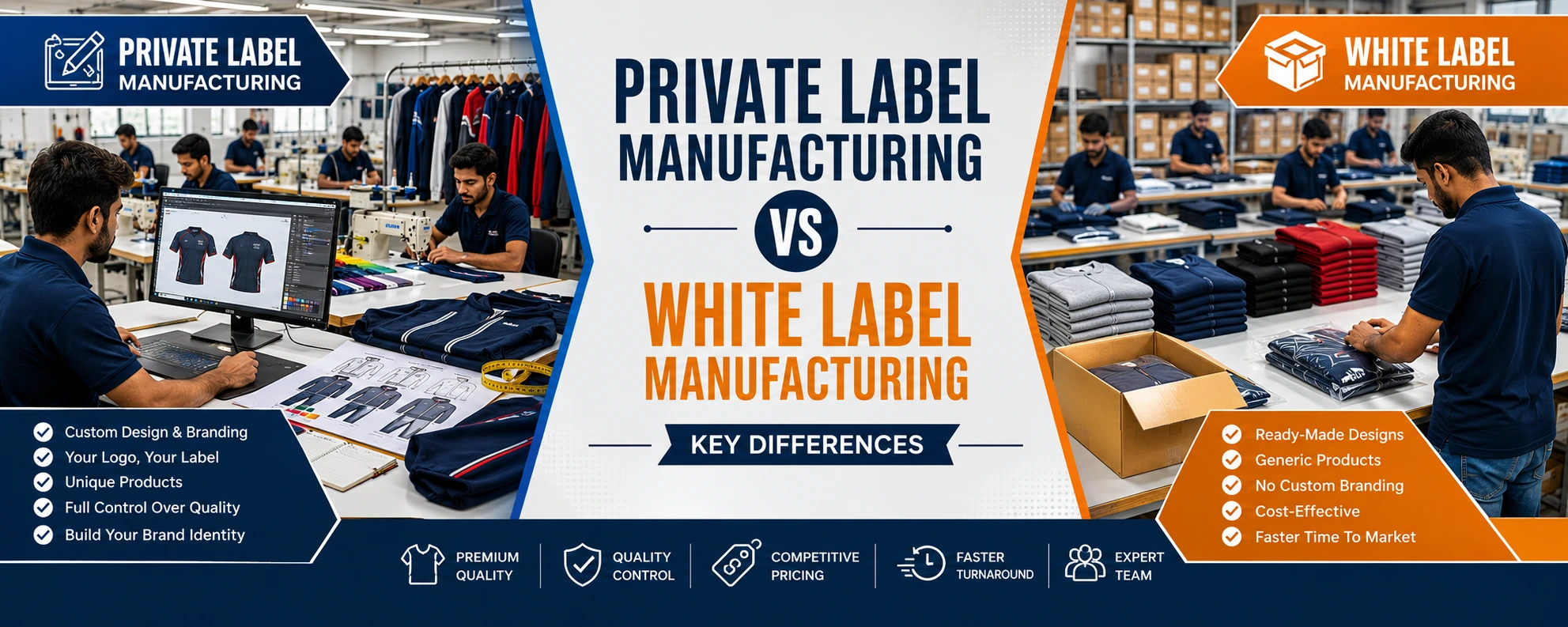
Two Models, One Big Decision
Private Label or White Label — Which One Is Right for You?
Most entrepreneurs use the terms private label and white label interchangeably — but they are actually very different models
and choosing the wrong one can cost you time, money and brand reputation. Before you partner with any manufacturer, you need to understand exactly what separates these two approaches and which one fits your business goals.
At Arbano Sports, we help businesses build and scale their own private label sportswear brands — because we believe brand ownership is the foundation of long-term growth.
So let’s break it down clearly. Private label manufacturing is a model where a manufacturer produces goods exclusively for your brand, based on your exact requirements. You control the design, materials, packaging and product features — everything is built around your brand identity, not a generic template.
The biggest strength of this model is customization. Whether you’re adjusting fabric weight, adding custom stitching or designing unique packaging, private label manufacturing gives you full creative control. That’s why it’s the preferred choice for businesses that want to stand out rather than blend in.
Why Serious Brands Choose Private Label Manufacturing
Brands choose private label manufacturing because it removes the need to own factories while still giving them complete control over what they sell. You get professional-grade production without heavy infrastructure investment.
Profit control is another major advantage. Because your product is unique to your brand, you face no direct price competition from identical products. And with a proper quality check at every production stage, you can be confident that every item meets your standard before it reaches your customer.
It also scales with you. Start with smaller orders, validate your market and increase production as demand grows — making it the ideal model for both new startups and established brands expanding their range.
Understanding White Label Manufacturing
White Label vs Private Label — What’s Actually Different?
Now here’s where most people get confused. White label manufacturing also lets you sell products under your brand name — but the similarity ends there. In white labeling, the manufacturer creates one standard product that dozens of different businesses can rebrand and sell. There is little to no customization involved.
Think of it this way — you pick a ready-made plain t-shirt or a generic supplement formula, put your logo on it and sell it. That’s white labeling. The product itself is identical for every brand that buys it. Only the packaging changes. It’s fast, simple and low-cost — but it comes with a significant trade-off.
White labeling is common in industries like cosmetics, software and basic apparel. Many white label clothing manufacturers produce standard items that hundreds of brands sell under completely different names — meaning your product could look exactly like your competitor’s.
What You Need to Know About White Label Products
White label products have three defining characteristics worth understanding before you commit to this model.
First, they are pre-developed — no R&D, no testing, no waiting. This dramatically cuts your time to market, which is useful if speed is your priority.
Second, they are cost-efficient. Because manufacturers produce them in bulk for multiple clients together, the per-unit cost is lower. This appeals to businesses with tight budgets.
However, the third point is the most important — white labeling offers very limited brand differentiation. You can change the logo and box, but not the product itself. In competitive markets, this makes it genuinely difficult to build a brand identity that customers remember or stay loyal to.
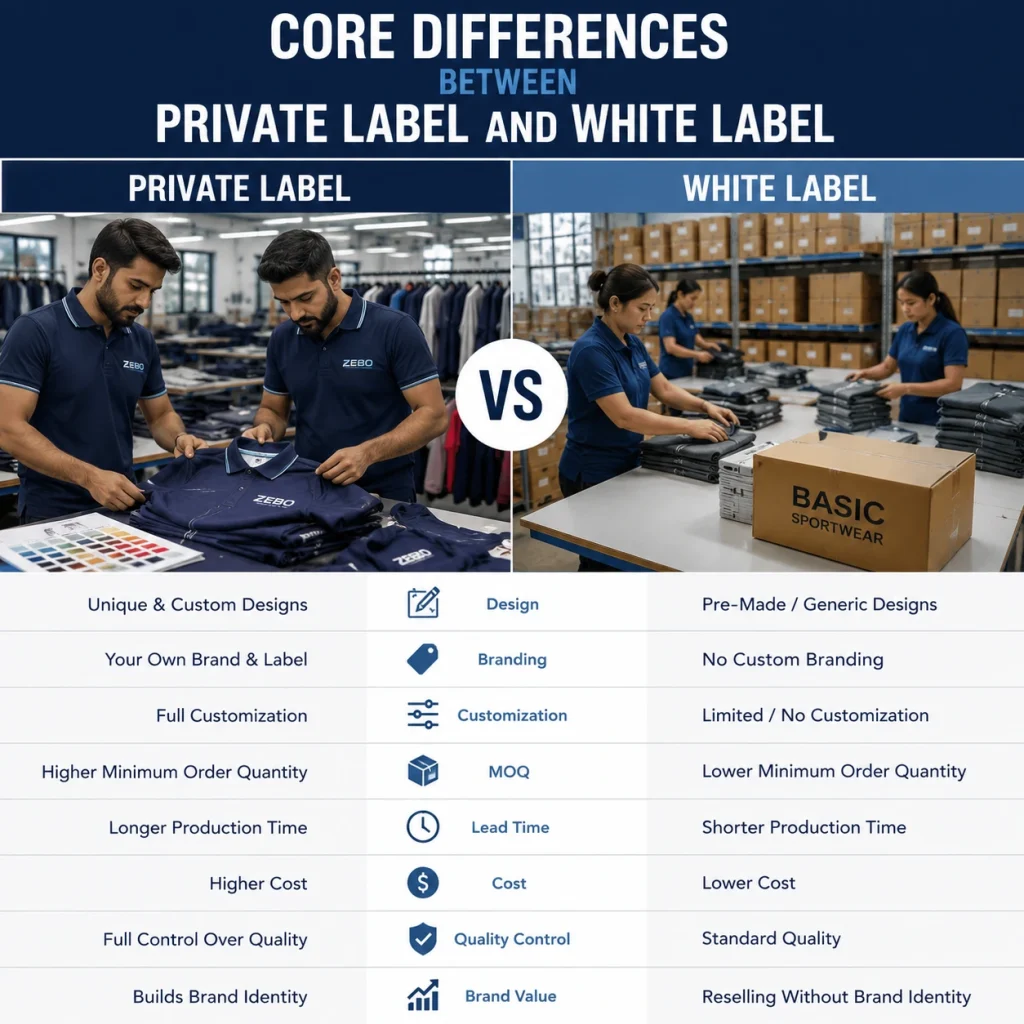
Core Differences Between Private Label and White Label
Customization Level
The biggest difference between private label manufacturing and white label manufacturing lies in customization. Private labeling allows full customization—from ingredients and materials to packaging and design. On the other hand, white labeling offers little to no customization, as the product is already pre-made.
Branding Control
With private labeling, you own the brand experience. You decide how your product looks, feels and performs. In contrast, white labeling limits your control to branding elements like logos and labels, while the core product remains unchanged.
Production Process Differences
The private label manufacturing process involves collaboration between the brand and the manufacturer. This includes product development, testing, prototyping and final production. White labeling skips most of these steps since the product is already ready for sale.
Target Business Types
Private labeling is ideal for businesses that want to build a strong, unique brand. White labeling works best for businesses that prioritize speed and low investment over differentiation.
Private Label Manufacturing Process Explained
Step-by-Step Workflow
The private label manufacturing process typically follows several key steps. It starts with research development, where product ideation takes place and you define what you want to create based on market needs and brand goals. This is followed by formulation or design, depending on the product type. Next comes sampling and testing, where prototypes are evaluated before mass production begins.
Once everything is approved, the manufacturer moves into bulk production. After production, products are packaged according to your brand specifications and shipped to your desired location. This structured process ensures quality and consistency at every stage.
OEM Private Label Manufacturing Role
OEM private label manufacturing plays a essential role in this ecosystem. OEM (Original Equipment Manufacturer) partners specialize in producing products based on your exact requirements. They bring technical expertise, advanced machinery and quality control systems to the table, ensuring your product meets industry standards.
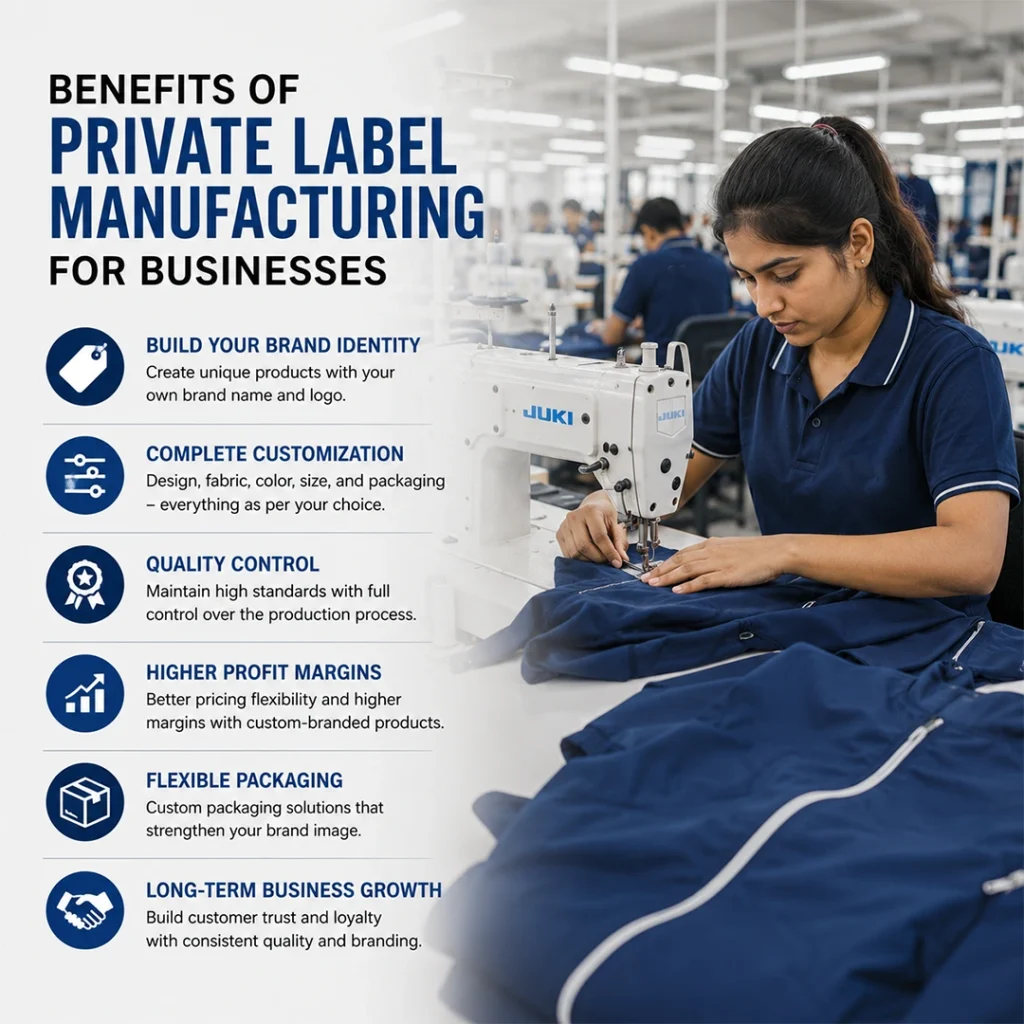
Benefits of Private Label Manufacturing for Businesses
For Startups
For startups, private label manufacturing for startups offers a low-risk way to enter the market. You don’t need to invest in infrastructure or hire a large team. Instead, you can focus on branding, marketing and customer acquisition while your manufacturing partner handles production.
For Established Brands
Established brands benefit from private labeling by expanding their product lines without increasing operational complexity. They can test new markets, launch seasonal products and respond to trends quickly using private label manufacturing services.
White Label Manufacturing Advantages and Limitations
Benefits
White labeling is fast, affordable and easy to implement. It’s perfect for businesses that want to launch quickly without spending time on product development. It also reduces risk since the product is already tested and proven in the market.
Drawbacks
The biggest drawback is lack of uniqueness. Since multiple brands sell the same product, competition becomes intense. This often leads to price wars and reduced profit margins.
Private Label vs Contract Manufacturing
Many people confuse private label vs contract manufacturing, but they are not the same. Contract manufacturing involves producing products for a company that already owns the formula or design. Private labeling, however, often includes product development as part of the service.
How to Find Private Label Manufacturers
Key Criteria to Evaluate
Finding the right private label manufacturers can make or break your business. Look for manufacturers with proven experience, quality certifications, flexible production capacity and strong communication. Always request samples before committing to large orders.
Low MOQ Private Label Manufacturers
If you’re just starting out, look for low MOQ private label manufacturers. MOQ (Minimum Order Quantity) determines how many units you must order. Low MOQ options are ideal for testing products without heavy investment.
Choosing the Right Private Label Manufacturing Company
Selecting the right private label manufacturing company requires careful evaluation. Consider factors like product quality, customization options, turnaround time and pricing. A good manufacturer acts as a partner, not just a supplier.
Private Label Products for Small Business
Private label products for small business are becoming increasingly popular. From skincare and supplements to clothing, team uniforms and food items, small businesses can create unique products that stand out in competitive markets.
White Label Clothing Manufacturers vs Private Label Clothing
In the fashion industry, white label clothing manufacturers produce generic designs that brands can rebrand. Private label clothing, however, allows businesses to create unique designs, fabrics and styles, giving them a competitive edge.
Conclusion
When it comes to choosing between private label manufacturing and white label manufacturing, the decision ultimately depends on your business goals. If you want full control, brand uniqueness and long-term growth, private labeling is the clear winner. It allows you to create products that truly represent your brand and stand out in the market.
White labeling, while faster and cheaper, limits your ability to differentiate. It’s a good starting point but may not sustain long-term brand growth. Businesses that aim to build strong brand identity and customer loyalty should focus on private labeling as their core strategy.
Contact our team at Arbano Sports if you need any assistance or want to start your own sportswear brand.
FAQs
What is the main difference between private label and white label manufacturing?
The main difference is customization. Private label manufacturing allows full control over product design, ingredients and packaging, while white label manufacturing offers ready-made products that only allow branding changes like logo and label.
Is private label manufacturing good for startups?
Yes, it is very suitable for startups. It allows new businesses to launch unique branded products without investing in manufacturing facilities, making it a cost-effective and scalable way to enter the market.
How do I find reliable private label suppliers?
You can find trusted suppliers through online B2B platforms, industry directories or trade shows. Always check product samples, certifications, minimum order quantity (MOQ) and customer reviews before finalizing.
What industries use private label manufacturing the most?
Private label manufacturing is widely used in cosmetics, skincare, clothing, team-uniform products, supplements and home goods industries where branding and customization are important.
Can I switch from white label to private label later?
Yes, many businesses start with white label products to enter the market quickly and later switch to private label manufacturing to build a stronger, more unique brand identity.